
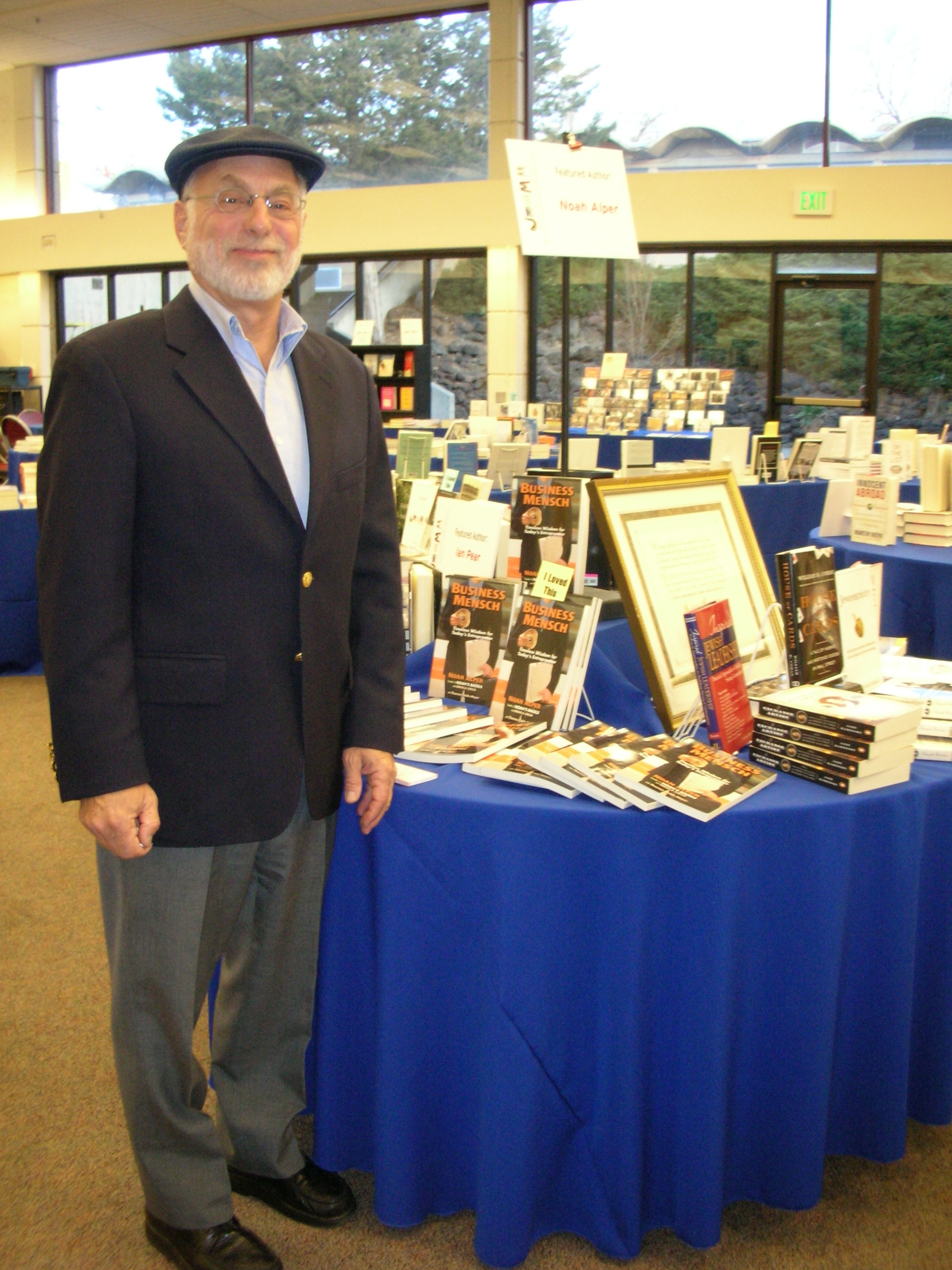
 On the Business Mensch book tour, I traveled in the sun, the rain and the snow from the Sunshine State, to the Evergreen State, to the Bay State, (and lots of others in between), and even a visit to our northern neighbor, Canada. I am thankful that my message of self-empowerment and “doing good is good for business” has been so well received. I am also thankful to the many individuals that purchased Business Mensch, and hopeful that they “got their money’s worth” as my Dad used to say.
I have done over 75 events, all unique, and I would like to share a few highlights and moments that filled me with excitement, pride and joy as I presented Business Mensch in various settings:
I spoke at Booksmith in Brookline, Massachusetts, my hometown, where I began my career as an entrepreneur, selling rustic wooden salad bowls on the sidewalk out front in 1972. In attendance was a woman who was my grandfather’s secretary in 1949, the baker who formulated the original recipes for Noah’s Bagels, my high school girlfriend, and several members of my family!
I enjoyed side trips to famous American landmarks like Betsy Ross’ house in Philadelphia and Fort McHenry in Baltimore (where the Star-Spangled Banner was written “at the twilight’s last gleaming”). I was moved by the spirit of community in Westchester County during a UJA-Federation of NY “Connect-to Care” event that brought out 200 New Yorkers seeking a little help from their friends in finding a way out of this grueling recession.
I was also moved to see seeds of entrepreneurship gestating in Detroit when I spoke at the E-2 Entrepreneur Conference at Wayne State University. I co-presented with a Muslim banker at the Graduate Theological Union in Berkeley on the topic of business ethics as presented in Jewish and Islamic texts. The audience, quintessentially Berkeley, included observant Jews, and observant Muslims, as well as the professional students for which Berkeley is famous.
I loved my presentation to the 7th and 8th grade at the Gideon Hausner Day School in Los Gatos, CA and especially that precocious kid who knew the three most important things about retail (location, location, and location, of course). I have been warmly greeted by business groups including a dozen Rotary clubs, and have been impressed that the spirit of volunteerism is so important to so many individuals.
I met people who have known me or known family/friends of mine from disparate parts of my life, as well as new friends and associates…my neighborhood playmate at age 3, a long lost high school chum, Jewish community leaders, Google engineers, tons of reporters and talk show hosts, internet bloggers, and many, many former Noah’s Bagels employees.
I met famous Rabbis, published authors, and incredibly dedicated community volunteers. At Beit T’Shuvah in Los Angeles, I met recovering substance abusers that were sparkling with life and optimism just because they were alive and had a plan.
Next stop…. Jerusalem. I will be presenting there in October. Come by if you’re “home” for the Holy Days!